

As 2025 winds down, one thing is clear: the advertising landscape is changing, and fast. With consumer behavior shifting and technology accelerating, businesses need to be strategic about their marketing approach in the new year.
At Palmer Ad Agency, we’ve been preparing for this future. Our artificial-intelligence (AI) powered frameworks are built for today’s realities—designed to maximize every dollar, boost brand visibility, and deliver measurable leads without wasting spend.
If you haven’t yet planned your 2026 marketing strategy, now is the time. Here’s a look at what’s coming, why AI matters, and how you can get ahead.
Forces reshaping advertising
Marketing leaders are facing converging pressures. First, budgets are largely static, hovering around 7 to 8% of overall company revenue, down from 11% in 2020. This leaves more than half of chief marketing officers feeling they have insufficient budget to execute their strategy. At the same time, competition is intensifying and the cost of digital advertising continues to rise, creating expectations to deliver tangible ROI on every dollar spent.
With marketers expected to do more with less, artificial intelligence is rapidly emerging as a baseline tool. Most marketers are using generative AI in some capacity as the technology becomes more practical for daily tasks. Artificial intelligence can enable smarter audience insights, faster ad creative development, and more precise campaign evaluation—but applying it effectively isn’t always straightforward.
Facing tight budgets, intensifying competition, rising costs, and rapidly evolving technology, marketers are often stretched thin and unsure where to focus. That’s why entering 2026 with a clear, strategic plan is essential. By prioritizing the right initiatives, leveraging the best options, and making every effort count, businesses can achieve meaningful results.
AI isn’t a trend — it’s the new baseline
As we head into 2026, AI is no longer a technology of the future; it’s powerful intelligence that’s changing marketing today. Surveys show that 45% of B2B marketers have identified increasing investment in AI-powered tools as a top priority for next year.
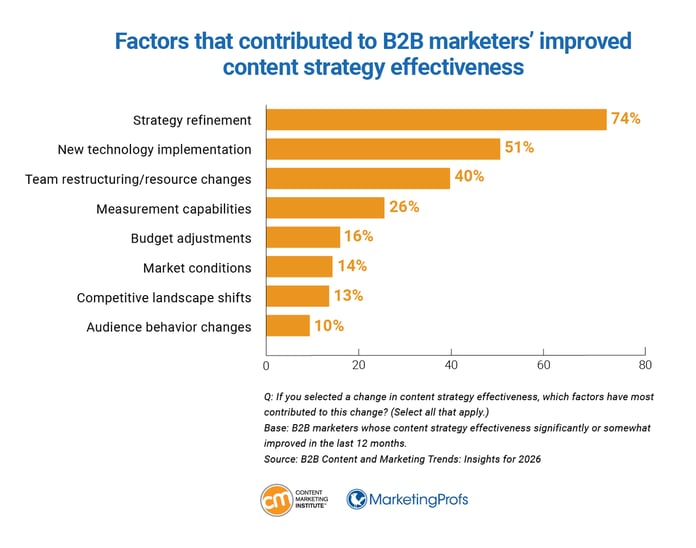
Teams are turning to artificial intelligence to compete in a landscape moving faster than human teams can manage alone. AI removes slow, manual steps and replaces them with faster intelligence: clearer information, sharper audience definition, and real-time feedback on what’s working. It’s not about replacing human judgment. It’s about equipping businesses with the intelligence they need to stay ahead. For businesses seeking outcomes within budget, AI has become the most reliable way to get there when working with a skilled ads marketing agency.
Palmer’s approach to AI
While businesses know they need an artificial intelligence plan, developing one can feel overwhelming. Only 47% of marketers report understanding how to use AI effectively, which means many teams are still unsure where to begin. We understand the struggle. Over the last 35 years, we’ve guided clients through every major shift in marketing—from the rise of search and digital advertising to the explosion of social media, programmatic buying, and marketing automation. Each transition has brought uncertainty, but it has also created opportunities for brands willing to evolve.
Our approach to artificial intelligence isn’t about cutting corners or slashing costs. It’s about enhancing efficiencies, increasing output, and creating more value within the budget you already have. As we’ve done for more than three decades, Palmer serves as a trusted partner through every marketing evolution, helping businesses adopt and use new platforms strategically. Here are a few of the key areas where we’re helping clients benefit from AI today:
1. Customer insights
AI uncovers deep customer insights faster and more efficiently, revealing hidden patterns, micro-segments, and actionable behaviors that drive smarter marketing blueprints and better impacts. It can identify subtle behavioral trends across online interactions, purchases, and social engagement that traditional methods might miss. This allows businesses to anticipate customer needs, tailor messaging to specific audience clusters, and predict how different segments will respond to campaigns, turning data into actionable strategy rather than just numbers.
2. Competitive analysis
Monitoring competitors in real time uncovers opportunities, closes gaps, and informs smarter marketing strategy. By scanning thousands of digital touchpoints—websites, ads, social posts, reviews, and news—intelligence surfaces at a speed and scale that human teams can’t match. This enables brands to respond quickly to market shifts, discover untapped positioning opportunities, and sharpen messaging. The result is a more proactive plan of action that turns competitive intelligence into a true advantage, helping businesses stay ahead rather than playing catch-up.
3. Brainstorming and concepts
Creative ideation accelerates as artificial intelligence generates fresh, audience-specific concepts at scale. Advanced tools can produce dozens of variations on a campaign theme in seconds, including taglines, messaging frameworks, and content angles tailored to different personas or regions. Artificial intelligence also helps break conventional patterns by suggesting novel metaphors, cultural references, or storytelling approaches that human teams may not naturally consider. With AI handling the volume of early ideation, creative teams can focus on refining and executing concepts, ensuring campaigns are both imaginative and strategically aligned.
4. AI workflow automation
From media buying to campaign reporting, tedious, time-consuming tasks can be automated, delivering faster turnaround, fewer errors, and transparent attribution. Artificial intelligence tracks every step of a campaign—from initial spend to final conversion—and provides real-time analytics to guide optimization. It also integrates workflows across platforms, consolidating reporting and reducing manual reconciliation. This level of automation not only frees teams to focus on strategy and creative thinking but also provides clients with the transparency and confidence they expect. In 2026, organizations that fail to adopt this level of workflow efficiency risk falling behind.
How AI can drive your 2026 results
If you’re responsible for growth—whether as a business owner, CEO, marketing director, or founder—embracing AI-enabled advertising tactics can deliver measurable impact:
- Maximize budget efficiency. AI-driven targeting and automation help you get more value from every dollar spent.
- Boost leads and visibility. Smarter precision and creative game plans increase conversions while protecting long-term brand equity.
- Make faster, data-backed decisions. With real-time insights, you move confidently without guessing.
- Gain a competitive edge. While some companies are still debating “if AI,” you’re already leveraging it to stay ahead.
- Scale marketing without scaling costs. This approach grows with your business efficiently, whether small or large.
Plan now to get ahead
Waiting until Q1 puts you behind competitors who have already started. December is the ideal time to align strategy, secure budgets, and prepare your AI-powered campaigns for a faster, smarter start in 2026.
At Palmer, we don’t believe in procrastination. We believe in preparation. Your marketing dollars deserve to work smarter. You can count on us to collaborate on implementing AI. Let’s schedule a strategic session to discuss our partnership.
Frequently Asked Questions
1. Why is AI important for marketing in 2026?
AI is no longer optional; it’s a baseline for effective marketing. It helps businesses optimize budgets, generate actionable customer insights, automate workflows, and stay ahead of competitors in a fast-moving landscape.
2. How can AI improve advertising efficiency?
AI enables smarter audience targeting, real-time campaign analytics, and automated media buying, which maximizes every marketing dollar while reducing manual effort and errors.
3. What challenges do companies face when adopting AI in marketing?
Many teams struggle with understanding how to use AI effectively, selecting the right tools, and integrating AI into existing workflows. Partnering with an experienced agency can simplify adoption and execution.
4. Can AI help small businesses compete with larger brands?
Absolutely. AI allows small and medium businesses to scale marketing without proportionally increasing costs, improve targeting precision, and make faster data-driven decisions to gain a competitive edge.
5. What results can businesses expect from using AI in their marketing?
Businesses can expect better budget efficiency, increased leads and brand visibility, faster decision-making, scalable campaigns, and a stronger competitive position in their market.
Get in touch with us for a free 60-minute consultation.
.