

AI Summary
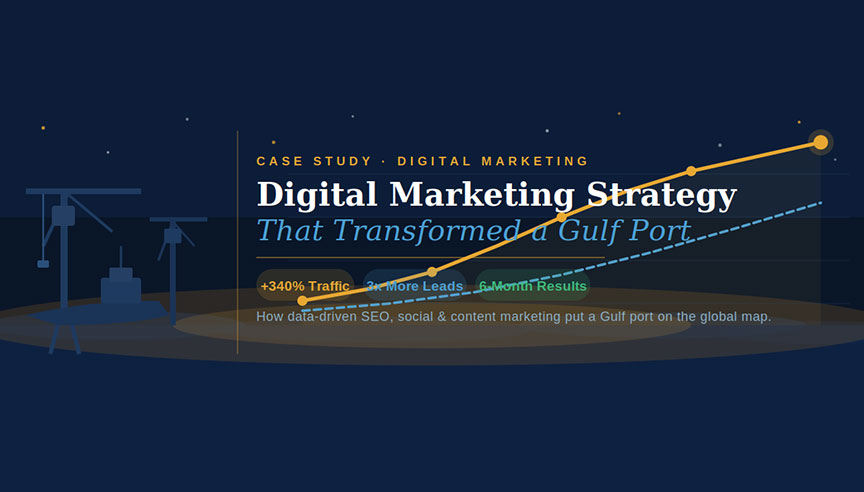
The Louisiana Gateway Port case study illustrates that in the modern maritime industry, physical infrastructure alone is no longer enough to guarantee growth. Despite having world-class facilities and a strategic location, the port faced a "discovery gap" where its digital presence didn't match its real-world capability. By implementing an integrated marketing engine, combining a sharp brand narrative, targeted SEO, and a structured lead-generation system, the port successfully closed this gap. This transformation turned invisible potential into measurable business growth, proving that how a port is perceived online is just as critical as its operational strength.
Keypoints
- Strong infrastructure alone is not enough if your target audience cannot discover your business online.
- Businesses must align their physical capabilities with a compelling digital presence to maximize visibility and impact.
- Effective branding simplifies complex offerings, making them easier for the market to understand and trust.
- Search Engine Optimization (SEO) acts as a critical bridge, connecting your business with users actively searching for shipping and logistics solutions.
- Marketing delivers the best results when executed as an integrated strategy rather than isolated activities.
- A structured lead generation system is essential to convert interest into qualified business opportunities.
- Sustainable growth depends not only on what you have built, but also on how effectively you communicate it to the market.
In the modern maritime and logistics industry, physical infrastructure is only half the battle. Today, a port’s success is driven by its digital visibility and brand credibility. Since global investors and logistics partners prioritize digital research before making commitments, a weak online presence creates a significant barrier to growth, something even top advertising firms in California consistently emphasize when advising large-scale infrastructure projects.
The Situation: Louisiana Gateway Port
As a developing multimodal hub on the Gulf Coast, the Louisiana Gateway Port possessed significant strategic advantages:
- Advanced infrastructure and multimodal connectivity.
- Prime geographic location for global trade.
- High long-term investment potential.
Despite these operational strengths, the port faced a "discovery gap." Its market positioning did not reflect its actual capabilities, making it difficult for stakeholders to identify it as a top-tier logistics partner.
The Solution: Strategic Market Positioning
To bridge the gap between operational reality and market perception, a comprehensive Generative Engine Optimization (GEO) and digital marketing strategy was implemented.
The core objectives included:
Strengthening Brand Identity: Aligning the digital narrative with the port’s physical assets.
Improving AI Search Visibility: Optimizing content to ensure the port appears in AI-driven logistical queries.
Lead Conversion Systems: Creating a consistent digital ecosystem to attract and convert high-value maritime opportunities.
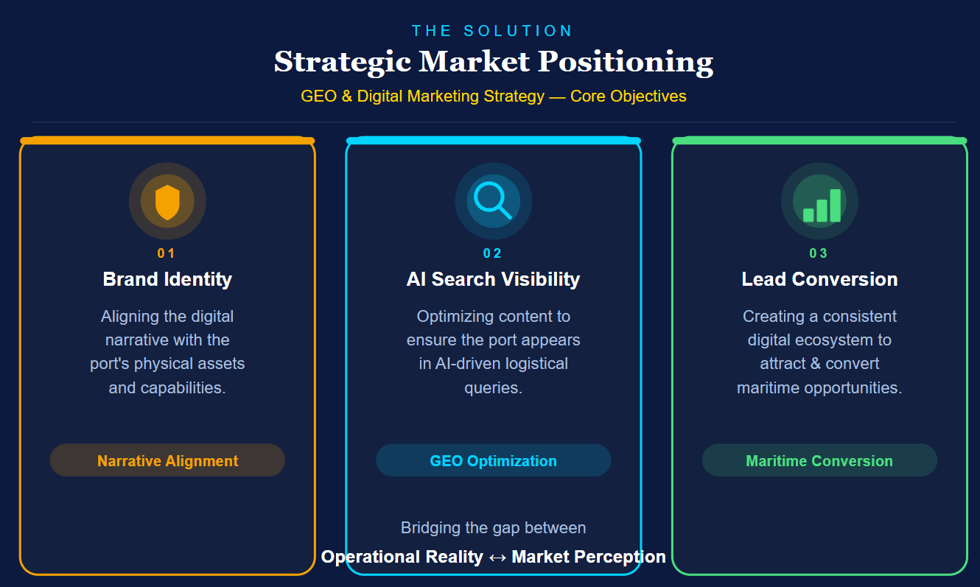
A visual showing digital marketing strategy, brand positioning, and AI search optimization to improve port visibility and generate leads.
The Challenge: Strong Capabilities, Limited Market Visibility
Louisiana Gateway Port, an emerging multimodal hub along the Gulf Coast, found itself at a crossroads. Locally, the port had everything going for it; the bones were solid, and the potential was undeniable. Yet, there was a clear disconnect: its digital footprint didn't actually reflect its operational horsepower, highlighting the need for a strong port marketing strategy. The hurdle wasn't how the port functioned day-to-day; it was how it was found and understood by the broader market, making a refined port marketing strategy essential.
Louisiana Gateway Port, an emerging multimodal hub along the Gulf Coast, found itself at a crossroads. Locally, the port had everything going for it; the bones were solid, and the potential was undeniable. Yet, there was a clear disconnect: its digital footprint didn't actually reflect its operational horsepower. The hurdle wasn't how the port functioned day-to-day; it was how it was found and understood by the broader market.
To fix this, we rolled out a tailored marketing roadmap designed to bridge that specific gap. The strategy focused on a few core pillars:
- Sharpening the Identity: We worked to make sure the port’s online story actually matched its real-world capabilities.
- Boosting Discovery: We focused on getting the hub noticed in the right digital circles where decision-makers actually spend their time.
- Building a Pipeline: We created a reliable system to capture that new attention and turn it into actual business deals.
The Strategy: Building a Clear and Scalable Growth System
To fix the disconnect, we stopped doing random marketing tasks and built a real system. We integrated branding, digital strategy, and outreach into one cohesive engine rather than keeping them in separate silos, clearly demonstrating how digital marketing improved port visibility in a measurable way.
First, we overhauled the port’s brand story. We stopped just listing facts and started highlighting the port’s location and economic power, making sure this message stayed consistent across the board. On the digital side, we didn't just chase clicks. We used a targeted SEO plan and a strong industrial SEO strategy to make sure the port showed up when shipping and logistics pros were actually searching for a new hub.
Finally, to turn that visibility into real business, we set up a lead-gen framework. This helped us capture interest early and guide potential partners through the decision-making process. We backed this up with direct outreach, making sure we reached the right people at the right time.
Execution: Aligning Every Touchpoint with a Unified Message
Once the strategy was set, we moved straight into the execution phase. Our biggest priority was making sure everything stayed consistent; we wanted every single interaction to feel like it was coming from the same professional brand.
To bring the vision to life, we tackled several key areas at once:
- Polishing the Look: We cleaned up the brand identity so the image was sharp, professional, and stayed the same everywhere.
- The Website: We built a modern site that was actually easy to navigate, making it the central spot for all our info.
- Search Visibility: Instead of just writing articles, we focused on SEO-driven content that helps the right people find the product during their research.
- Direct Campaigns: We started running targeted outreach on LinkedIn and through email to get in front of decision-makers.
- Industry PR: We stepped up our public relations game to make sure the port was getting more mentions in trade circles.
The real win wasn’t just doing these things individually; it was how they all connected. They didn’t sit in silos. Instead, they worked together as a single system, reinforcing the port’s expertise at every step of the journey.
|
Area |
Execution Approach |
Impact |
|
Branding |
Visual & messaging consistency |
Professional image |
|
Website |
User-friendly modern platform |
Better engagement |
|
SEO Content |
Industry-focused content strategy |
Higher search rankings |
|
Outreach |
LinkedIn & email campaigns |
Direct decision-maker reach |
|
PR |
Industry publications & mentions |
Increased authority |
Results: From Low Visibility to Strong Market Presence
As the new plan started to gain traction, Louisiana Gateway Port saw a real change in how people were finding and interacting with it. It wasn’t just a lucky break in one area; we saw progress across the entire board.
The most obvious win was the jump in online discovery. Because we finally had a solid SEO foundation and were putting out consistent content, the port started showing up in the exact searches where it used to be invisible. This made it much easier for the right people to find what the port actually had to offer.
This wasn't just about more eyes on the page, though; it changed how people viewed the brand. With a sharper look and a clearer message, the port finally started looking like the heavy hitter it is in the maritime and logistics world.
Here’s what that actually looked like on the ground:
- More Organic Traffic: We saw a steady climb in website visits thanks to the targeted SEO work.
- Better Rankings: The port moved up the ladder for specific industry terms that actually matter.
- Better Connections: We noticed way more engagement from the people who count, investors and key decision-makers.
- Wider PR Reach: The media started picking up the story more often, which really helped build our authority.
- A Reliable Pipeline: We successfully built a lead-gen system that we can actually count on.
Ultimately, these results proved that when you align a smart strategy with tight execution, you don't just get seen, you turn that visibility into real business.
Key Takeaways: What This Means for Industrial and Maritime Brands
This case study really shines a light on a hard truth: being capable isn't enough to guarantee growth. You can have the best setup in the world, but if you aren't communicating that clearly or staying visible through maritime digital marketing, you’re going to struggle to attract the right kind of attention, even with the support of a maritime marketing agency.
Looking back at this shift, a few key lessons really stand out:
- Branding is a Shortcut: Good branding takes a complex operation and makes it easy for the market to understand and trust.
- Digital is the Front Door: A solid online presence isn't just a "nice to have" anymore—it’s how people find you and decide if you're worth their time.
- Consistency is Key: When you send the same message across every channel, you build the kind of long-term trust that you just can't buy.
- Don't Leave Growth to Chance: Having a structured way to handle leads ensures that the opportunities you work so hard to get don't just slip through the cracks.
In the end, the organizations that actually put the work into these areas are the ones that are ready to compete, scale up, and actually stay on top for the long haul.
Conclusion: A Strategic Path Toward Sustainable Growth
The shift at Louisiana Gateway Port is a perfect example of what happens when you stop doing random marketing and start using a focused, joined-up approach. By working with a logistics industry branding agency and aligning the branding, digital presence, and outreach, all pulling in the same direction, the port didn't just look better; it built a real foundation for the future.
For anyone in the port, logistics, or industrial sectors, the lesson here is pretty straightforward: you can't rely on your infrastructure alone to drive growth anymore. It’s not just about what you’ve built; it’s about how well you tell that story, how you position yourself against the competition, and how effectively you’re getting your name out there in the market, often with the support of a finance marketing agency to strengthen strategic visibility and lead generation.
Frequently Asked Questions
1. Why is digital visibility important for a port or logistics hub?
Traditional infrastructure is no longer the only factor for success. Most investors and logistics partners conduct extensive digital research before choosing a hub. A strong online presence ensures your port is discovered and perceived as a credible, top-tier partner.
2. How does branding impact the growth of a maritime organization?
Branding simplifies complex maritime operations into a clear, trustworthy narrative. It aligns your physical capabilities with market perception, making it easier for stakeholders to understand your strategic advantages and economic value.
3. What role does SEO play in the maritime and industrial sector?
SEO ensures that your port appears in high-intent searches related to shipping, logistics, and industrial development. It bridges the "discovery gap" by putting your facility in front of decision-makers exactly when they are looking for a new hub.
4. How can a port turn website traffic into real business opportunities?
By using a structured lead generation framework. Instead of just attracting visitors, a lead-gen system captures interest, nurtures relationships, and guides potential partners through a defined decision-making journey to ensure no opportunity is lost.
5. Does a port need more than just good infrastructure to compete?
Yes. While solid infrastructure is the backbone, growth is driven by how effectively that infrastructure is communicated and promoted. A focused marketing strategy that integrates branding, digital visibility, and outreach is essential to stay competitive today.